Recycling and Sustainability for Driveway Pressure Washing
Driveway pressure washing and driveway cleaning services are changing to meet higher environmental standards. Our page outlines how we minimise waste, support local reuse, and operate a low‑carbon fleet while serving neighbourhoods that follow borough‑level recycling rules. We balance effective pressure washing of driveways with strategies for an eco-friendly waste disposal area and a practical, sustainable rubbish gardening area on site that turns waste into value.
![A man with short dark hair, wearing a red and white checked shirt and black gardening gloves, is pruning or tending to a flowering rose bush in a well-maintained front or backyard garden. The garden features neatly trimmed green hedges and shrubs, a vibrant green lawn with dense grass, and a paved patio area with a modern outdoor lounge chair visible in the background. Behind the garden, there is a light blue swimming pool with a curved edge, surrounded by lush trees and bushes, suggesting a spacious, landscaped outdoor environment typical of properties in the [POSTCODE] or [TOWN] area. The scene is captured during daylight with natural sunlight, creating a bright and inviting atmosphere indicative of regular outdoor garden maintenance services offered by Driveway pressure washing and gardening specialists that focus on sustainable and eco-friendly practices in a residential setting.](/pub/_photos/gardening/f1309900800.jpg)
Our Recycling Percentage Target and Water Strategy
We have set an ambitious recycling percentage target: to divert 80% of solid waste from landfill and to reclaim or treat at least 60% of process water used during pressure washing drives. For pressure washing driveways, the primary waste streams are silt, organic debris, loose stone, and packaging from materials. We separate these at source and track volumes so that our environmental performance improves year on year. Where water cannot be reused on site, it is routed to licensed treatment facilities rather than the sewer.
Local Transfer Stations and Borough Waste Separation
We coordinate with local transfer stations and civic waste hubs to ensure materials are handled correctly. Many boroughs operate a separate‑stream approach — glass, plastic and paper as dry recyclables, food and garden waste as organics — and we mirror that separation on site. Our operators follow municipal guidelines for collection points and use marked containers so recyclables go directly to municipal partners or certified recycling processors.
 To support regional infrastructure, we maintain a log of which transfer stations and materials recovery facilities (MRFs) we deliver to. This helps us confirm recycling outcomes and comply with local borough waste management plans. For example, reclaimed gravel and paving stone often go to local reuse sites or landscaping projects, while organic sweepings are composted through municipal organics schemes or community composting hubs.
In practice, pressure washing driveway waste is separated into distinct fractions: grit and silt, organic matter, inert solids (stone, broken pavers), and mixed recyclables. Each fraction has a dedicated path to either recycling, reuse, or lawful disposal.

Partnerships with Charities and Community Reuse
We actively partner with local charities and reuse organisations to give materials a second life. Unbroken pavers, bricks, planters and good quality stones are donated to community gardens, repair cafés and reuse stores rather than sent to landfill. These partnerships are central to our sustainable rubbish gardening area concept: usable landscaping materials are diverted to community planting projects, school gardens and local not‑for‑profit groups.
Highlights of our community partnerships:
- Donation pathways: reusable materials to local charities and reuse centres
- Composting collaborations: green waste and biodegradable sweepings to community composting sites
- Skill sharing: workshops with community gardens on using reclaimed materials
Low‑Carbon Fleet and Operational Efficiency
Our fleet includes low‑carbon vans — electric and modern hybrid models — that reduce emissions during service runs. We schedule jobs using route optimisation software to minimise mileage, and chargers at our depots are powered by renewable electricity where possible. For jobs requiring more equipment, we prioritise compact, fuel‑efficient vehicles to reduce the carbon footprint of every driveway pressure washing operation.
In addition to vehicle choices, we invest in eco‑efficient equipment: low‑water pressure systems and closed‑loop recovery units that capture wash water, separate contaminants and allow reuse or safe discharge. This reduces the amount of contaminated runoff entering public drains and aligns with best practices for an eco-friendly waste disposal area.
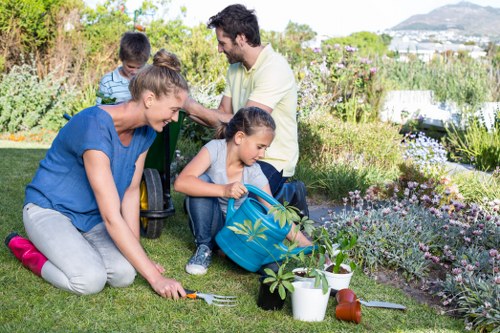 Sustainable rubbish gardening areas are built into our project workflows: green waste and horticultural debris from driveways and adjacent borders are composted or processed to create mulch and soil conditioner for community gardens. Where chemical cleaners are necessary, we select biodegradable, phosphate‑free solutions and neutralise residues before disposal.
Monitoring, Reporting and Continuous Improvement
We publish internal performance reports on recycling percentages, water recovery rates and emissions from our service fleet. Continuous improvement targets include increasing solid recycling to 85% over three years and raising water reclamation above 70% via investment in better treatment units. We also audit our partnerships with local transfer stations and charities to make sure materials are reused or recycled as promised.
For residents and local councils working with our driveway cleaning teams, we provide clear signage and segregation on site so staff and clients can see how waste is being managed. This transparency ensures compliance with borough approaches to waste separation and reinforces the value of sustainable driveway pressure washing services for the wider community.
By integrating targeted recycling goals, municipal coordination, charity partnerships, and a low‑carbon fleet, our driveway pressure washing operations deliver cleaner surfaces with a smaller environmental footprint and greater community benefit.